Monday, January 28, 2013

Peer Responses

Laura Tatone:

I liked your paper overall. You told me what I need to know about the paper and the writer and touched on some of the key points that were required for this assignment. You have a very strong piece of writing and it is also a touchy subject. And that would mean that there should be a little more analysis on the appeals. You briefly mentioned the appeals ethos, pathos, and logos, but you did not really tell me when it was used and how and why it worked for this article. If you went a little further on the analysis of why it is all three of the appeals your paper would be a lot stronger. I did like the summary of the article and helped me have a better understanding of what was going on. But I believe if you would have added in the rhetorical devices to explain this article, your paper would have been a lot better than it already is and definitely much stronger.


Hannah Singleton:

You and I share this article in common, but we took different stances on it. I see your point and you make them sound pretty clear to me. You wrote a very strong and clear easy that shows that it should go in the second chapter rather than the first. You did well with applying what we learned in class into your paper and you made sure that it was not dry paper. It was interesting to read and put some things into prospective for me. Granted we are supposed to write to the “imaginary editors of a book” but I also took into account of the “other” readers would feel about the chapter. I totally agree that men should strive to be better since women are doing better, but I do not fully agree with her argument. There are more jobs and opportunities then there were back then and as for the men themselves, without the diversity the world would be bland. So I chose this article because it was funny and I see that you chose it for similar reasons. I enjoyed reading your paper and it gave me some insight as to how I could better my own paper. So thank you for that. 
 

Saturday, January 26, 2013

Writing Project One Draft


“Where Have the Good Men Gone”
            Once upon a time there were men that were true gentlemen, but over the years they have started to dwindle down to almost extinction. All that women are left with are immature men that will not commit to a relationship or are too childish to even care about anybody but themselves. Kay S. Hymowitz argues that men in their twenties are going through a prolonged adolescence because everything is given to them that enables them to stay in this phase. The two main reasons why there are not any “good men” around are because of the media and women are becoming more and more educated which makes them more powerful and maybe even a little intimidating.
            This article should go in chapter one because although the topic is a little touchy and risky to talk about, she makes valid points on the matter at hand and even has sources. She cites an author, Julie Klausner, who wrote, “I Don’t Care About Your Band: What I Learned From Indie Rockers, Trust Funders, Pornographers, Felons, Faux-Sensitive Hipsters, and Other Guys I’ve Dated.” Both women share the same thought on today’s men population. There is no longer one kind of man that is the “protector and provider,” nowadays there seems to be more and more different types of men. She also used visuals to bring in her argument that there is a diversity of men that a few decades ago the world did not have. She uses an appeal to pathos because more than likely a lot of women will agree with her on this matter. Whether the argument is true or not she plants a seed in the minds that read this article and uses these sources and visual imagery of men to prove her point.
            The media is a major factor in her article. There are many pictures of men in movies from Seth Rogen to Charlie Sheen. One man is the typical dead beat that has to grow up and face he responsibilities like an adult and the other is powerful man that wants more in life. She has many pictures like this to show the readers examples of the kinds of men she is talking about. Her most important argument is that the media is fueling the men’s behavior. If there were no naughty magazines, sports bars, or shows like Spike and Comedy Central, men would be out in the real world and improving themselves, marrying, and helping the world. But that is not the case because these instruments that make men “frat boys” do nothing to improve the men’s behavior.
            It appeals to pathos because this article can either make the reader agree full hardly or infuriate them because they believe that what she says is not true. If an article and a person can make them feel this way, she is properly executing the article in the way that she meant. It gets people to start thinking about what the media does to people and what started this whole chain reaction. This is just one of the reasons why it should be in the first chapter of the book.
            The other reason for this article to be in the first chapter is that it appeals to logos. Now whether the logic is true or not she has statistics and graphs that show and prove her point. She claims that another reason that there are no good men is that since women have been increasingly educating themselves, it is pushing out and weeding out the competition. She also claims that women have more confidence and have more drive to accomplish their goals. So what she is saying is that in a sense, the education of women has also decreased the number of good men, either because they are insecure about themselves or they are too lazy and would rather let women do the jobs, while they complain about women having the jobs in the first place. She says that the men that are out there have to go through a lot more hoops to assert their manhood because people are constantly looking at them and judging them on their every move. Women on the other hand do not really get critiqued so it is easier for them to slip under the radar of judgment. An example of a test of their manhood would be that they have to be smart without being snobbish or arrogant.
            Another statistic that she uses is that girls mature faster than boys and never has that statement been truer than it is in today’s modern world. Men have either stopped maturing completely or have been on a very long hiatus and it is just a matter of time before they snap out of it. A few decades ago people would marry young because that was what people did in that time, but more and more in this day in age, men have stopped marrying young or not married at all. Hymowitz says that there are less young married couples than there were a few decades ago and that that is due to the fact that people want to get careers that pay well. And in order to do so they have to go through years of schooling. Add the media and educated people together and it equals a lot of single people with either well paying jobs and no family or family and no jobs.
            Overall, this article should be in the first chapter of the book because it grabs the reader’s attention through the use of pathos and logos by providing images that are used as examples for the types of men she is describing and by using statistics about women versus men on an educational level, working level, and relationship level. Now whether her argument is ethical or not is up for debate because many people could take offense of this topic and be hurt by what she says.

Sunday, January 20, 2013

Appeals


http://upload.wikimedia.org/wikipedia/commons/a/ae/Aristotle_Altemps_Inv8575.jpg

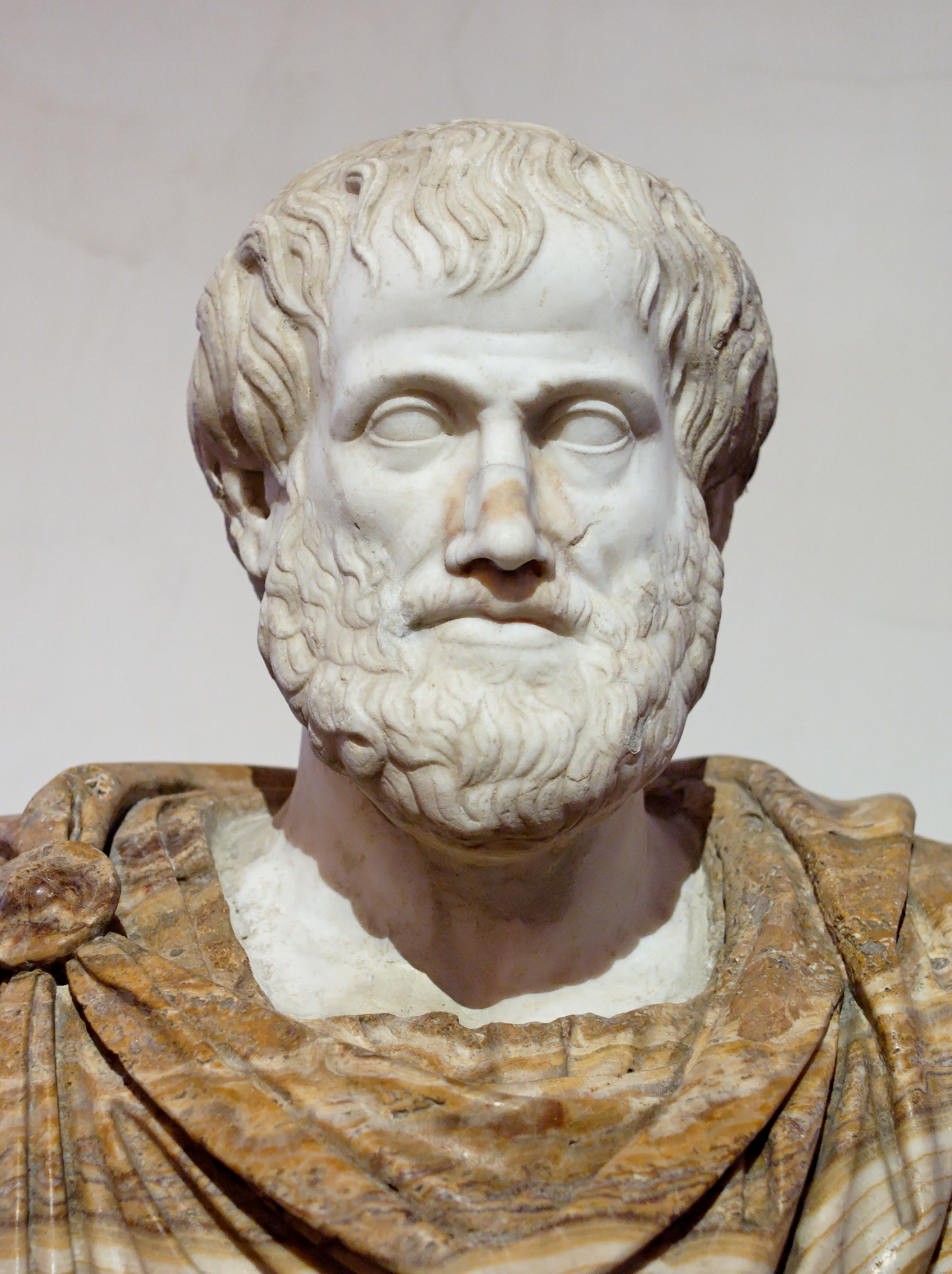
I was first introduced to “pathos,” “ethos,” and “logos” my junior year of high school. Before that I had no idea that they even existed or to be more correct that they had a name for types of argumentative appeals. My English teacher, Ms. Cunningham was the one to drill what these appeals meant into my brain. I wrote many papers having to do with one or all of the appeals. We wrote about logos and watched videos and wrote short missives or long essays dealing with these types of arguments. I remember one of my assignments in her class was to write three short essays using one topic and each had to be written with a specific appeal. For example, I chose to write about the kids in Africa. I had to write about the children in Africa three times, but one essay had to be nothing but pathos, the other nothing but ethos and the last nothing but logos. I remember when I was writing this, I was thinking to myself this is hard. The topic I chose is a mixture of the three appeals so it took me awhile to get a hang of this specific prompt.  You can show sympathy and emotion in pathos, show moral and ethics with ethos, and logic with logos. So I remember that I found this idea of separating the appeals to make a separate essay about the topic to be difficult. I did it and got a good grade, but I realized that you can’t truly have one without the others. They all relate in some form or another and I guess that is how people and the media get you. They make you see and think in a certain ways so that what you would normally see clearly, you no longer do. In a sense it clouds your judgment and pulls the emotions out of you or makes you think a lot more logically than you normally would. So I guess we can’t live with them and we can’t live without them.

Monday, January 14, 2013

Not Just Words 1


Chapter 2 page 43

     My first response or rather what I see of the image provided is that it represents the American flag. My second response is that it does not have fifty stars, but that it has thirty American companies in place of the stars. From the picture I get that there is a materialistic vibe coming off of it. It appeals to logos because it has thirty American symbols that are iconic in today’s day in age. Everyone knows or has heard of these companies and they are popularized through word of mouth or the media. But these are just images, if we look further into the image it would also appeal to ethos. From “Coca-Cola” to “Disney” each and every one of these images sparks an emotion from someone. They all have different meanings to certain or many individuals. One is considered to be the best soda and has the best commercials with the cute little polar bears; the other has childhood memories of rides, stories, and movies. Each of these symbols has a connection with people which lends it to also appeal to pathos in a sense. “Disney” is the “Happiest place on Earth” and that is how every child sees it. They associate anything Disney to the theme parks or the toys or the movies and shows. All of the icons on the American flag represented have an emotional or logical connection with families or people in general because we either use them or go to them which makes this image all three appeals.
https://mail-attachment.googleusercontent.com/attachment/u/0/?ui=2&ik=65ad1ad958&view=att&th=13c3a99cc48e2222&attid=0.1&disp=inline&safe=1&zw&saduie=AG9B_P90a4pYAnPUQx6rSe3JPish&sadet=1358196440334&sads=N4klEuo7o8lzIJv6tQ-MmeK1D5g&sadssc=1
"Everything's an Argument," Lunsford and Ruszkiewicz page 43

Chapter 4 page 71

     At first glance the image would look like it appeals to both pathos and ethos, but on closer inspection we realize that that is not the case. The caption under the title QUALITY is “THE RACE FOR QUALITY HAS NO FINISH LINE- SO TECHNICALLY, IT’S MORE LIKE A DEATH MARCH,” (Lunsford and Ruszkiewicz 71) means that no matter how hard a person strives to achieve their goal, setting too high of a standard could be the death of you. Aiming big does not necessarily mean that you will get what you want or when you want it. Sometimes making small goals will not only allow for a person to actually achieve their goals, but it will give them a boost in confidence because they are accomplishing several goals rather than just one or not accomplishing one at all. Everyone dreams big, but the end result is usually the same, everyone will either get half of it done or none of it at all. So I think that this image is trying to say that the bigger the goal is the harder it is to achieve it, so if you make smaller ones you are more likely to get them done with less hassle. This is logical because the bigger the goal is the harder it is to actually get it done and in the end you feel worse about yourself. In a sense it appeals to pathos and ethos, but because it has that logical caption it is closer to logos.